



Reading Curriculum
Reading at Ashleigh
Reading is at the heart of everything we do.
At Ashleigh we believe that reading opens doors to curiosity, imagination and lifelong learning. Our curriculum is built around high quality texts that inspire children, deepen their understanding of the world and drive learning across all subjects. Through rich stories, diverse authors and carefully chosen nonfiction, we nurture a love of reading that helps every child grow as a confident, thoughtful and enthusiastic learner.
Early Reading and Phonics
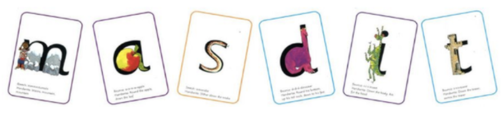
At Ashleigh, we use Read Write Inc. Phonics which is a highly successful reading programme.
All Reading Teachers at Ashleigh have received intensive training and support from Ruth Miskin Training (rated Outstanding by the Department for Education) to ensure we meet our aim for all children to become confident and enthusiastic readers.
From nursery upwards, our youngest readers take part in daily phonics lessons that prepare them for lifelong learning.
Each lesson is systematic and structured, full of active participation and allows children to read words and/or books closely matched to their developing phonic knowledge.
Each year we run parent workshops to help you support your child’s reading at home.
Beyond Phonics
Once children have graduated from Read Write Inc. phonics, they move into our Whole Class Reading curriculum, where reading continues to sit at the heart of their learning. Our approach is grounded in Doug Lemov’s Reading Reconsidered, ensuring that all pupils at Ashleigh are equipped to read well and read independently by the time they leave us.
In whole class groups, children engage with rich, challenging texts that teachers carefully guide them through, supporting the development of ambitious vocabulary and deeper comprehension while increasing reading fluency.
Our fiction texts are selected from the “Five Plagues of Reading”: the common challenges that texts have that children need regular exposure to if they’re going to become strong, confident readers. A description of each plague and a select example for each is outlined below:
Archaic texts: texts written over 50 years ago with older language and sentence structures.

Non Linear Time Sequences: texts which require readers to navigate shifts in time.
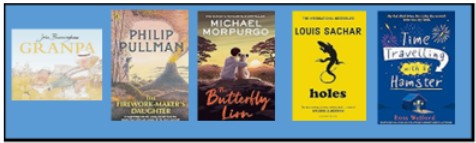
Complex Narrators: texts which are written with multiple or unusual narrators.
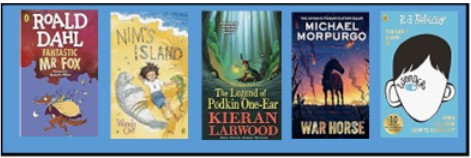
Complex Plot and Symbolism: texts where themes and events intertwine or symbols are used to represent ideas.
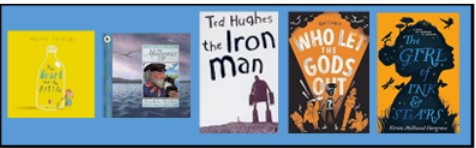
Resistant Texts: texts such as poetry, that demand close attention.
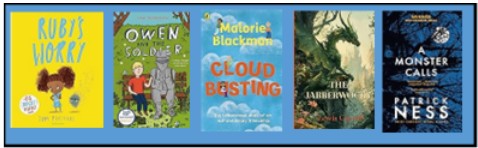
In addition to these texts teachers also use carefully selected high-quality non-fiction texts, some which link to the wider programme of study and some which are selected to engage and excite children.

Exposure to these demanding but rewarding texts helps children build the resilience, proficiency and critical thinking needed for secondary school and beyond.
Lessons are then carefully planned to focus on the core skills of reading: Vocabulary, Inference, Prediction, Explanation, Retrieval and Summarising. (VIPERS) These skills are revisited and developed throughout the year, ensuring that every child is equipped with the strategies they need to read confidently and with understanding.
Favourite Four Texts
“It is not just the number of different stories children listen to that matters. On each re-reading, their familiarity with a story deepens and, with that comes a greater emotional engagement.
When children ask for a story to be re-read, in effect they are asking for another chance to explore the language, the characters and their feelings, and to relive the emotions they felt on the first reading. They hear the same words read in the same way and gain a sense of comfort in knowing what follows. They wait for their favourite bits, ready to join in or ready to be scared, even when they already know what happens. Their attachment to the story equips them to retell it and, when they have learnt to read, encourages them to read it for themselves.” (The Reading Framework)
Each half term, our Nursery, Reception, Year 1 and Year 2 children are introduced to four new “Favourite Four” books which are repeatedly read during class story times. The children benefit significantly from the repetition and are soon joining in with gusto!
Our Favourite Four books have been carefully selected to ensure that they are diverse and inclusive for children aged 3 to 7. All children see themselves in stories. All children are seen.
These carefully selected stories help children at Ashleigh to become empathetic and reflective. Themes on our list include: family and friendship; exploring feelings; kindness and community; our planet; change and bereavement; moving home or country; the power of speaking up. Our Christian Values of hope, compassion, respect, forgiveness, aspiration and service are also reflected widely in these stories. Books that develop number sense are included for Nursery and Reception to support early mathematical understanding.
Class Stories
“Reading aloud fosters positive attitudes, enhances pupils’ motivation to read, and develops vocabulary and other knowledge, including of books, authors and genres that they might not choose to read for themselves. It also contributes indirectly to their fluency, as they listen to an accomplished reader bring a text to life.” (The Reading Framework)
Daily class story time is a valued part of the Key Stage Two experience at Ashleigh. Each day, teachers set aside dedicated time to read aloud to their classes, giving children the chance to relax, listen and enjoy high quality literature together.
At the start of the year, teachers often choose a book linked to their class namesake, helping to build identity and community. As the year progresses, stories are selected from the Ashleigh Class Story Spine — a carefully curated collection of books that ensures every child is represented and “seen” in the stories they hear, while also opening doors to cultures, communities and worlds beyond their own experiences. These rich, inclusive texts echo the school’s wider commitment to diversity and empathy, reflected elsewhere in the reading curriculum.
Listening to teachers bring stories to life not only strengthens children’s comprehension but also provides a model of expressive, fluent reading to aspire to. Through these shared moments, pupils develop a love of reading that enhances their confidence, imagination and enjoyment of literature both in and beyond the classroom.